  |   |
1.
The morning session started with the reading of the Word of God from the Gospel
according to Luke and the singing of Alleluia before and after the reading. The
Word of God was read in Tagalog by Cielito Almazan.
Stefano Ottenbreit, the facilitator assigned for the day, warmly greeted everyone. He requested a member of the secretariat to give a short synthesis of what had transpired the previous day. Neil Badillo did a recap.
In his introduction, Ottenbreit presented three pictures depicted by an artist about three different encounters in the life of St. Francis 800 years ago. These encounters had great influence in the form of life the friars lived in the course of history and until the present as they continue to search for a meaningful meeting with God and his people.
Encounter with the Gospel. This is encounter with the living Christ, an encounter with God, living according to the Holy Gospel. Listening and living the word of God can give us credibility in our life, mission and evangelization.
Encounter with the leper. When we encounter those who suffer, we are faced with the demand not only for works of mercy, but to restore the dignity of the poor and their hope of living. The key word is solidarity. We must identify ourselves with the poor.
Encounter with the Sultan of Egypt. An encounter of two different personalities but they had respect for each other's differences. When one has a meeting with the other, one should not bring anything, just like Jesus commissioning the apostles. When we are in dialogue, we respect the culture and religion of others. We live as a testimony and we live in peace.
2. Reflection of Ambrosio Van Si entitled “An Evangelising Fraternity”
The reflection had five main parts:
Introduction – where he cited some important documents of the Order from the last 20 years.
Part I. The munus of evangelization – At the service of the Kingdom: a special aspect of the franciscan fraternity; Starting out from Christ and in the foootprints of St. Francis
Part II. An evangelising fraternity – a presence of faith; a humble presence; a fraternal presence; a prophetic presence; a missionary presence; an inculturated presence
Part III. Activity or areas of work – highlighted present realities: the deacreasing number of vocations; the ever-changing world; and globalization
Conclusion – “let us follow the example of Paul, Francis and of the early friars, not as individuals, but as a fraternity, precisely as an evangelising fraternity.”
(Thirty-minute coffee break and re-reading of the reflection especially on three questions posed by Ambrosio)
Some comments and insights from the report of Ambrosio Van Si:
Everybody was grateful for the reflection of evangelization shared by Ambrosio Van Si.
The Order is gifted with so many documents including documents on evangelization. What we are lacking is the implementation of these documents (Rozansky).
That the importance of experience, the signs of the times, and knowing the world be given emphasis because we evangelize according to our experience and not according to what is in our head.(Rozansky)
There are many models of sanctity. Understanding the meaning of sanctity in our time is a point of departure. It is a real risk when we become more contemplative or progressive than being friars minor. The need to inculturate our religious life is very important (Scherz).
The real challenge is how to enflesh or to make alive the good documents of Order. The renewal of our franciscan life, living in diversity but inclusive of all cultures and not tied up in one concept. The respect for the richness of external manifestations of the values of the Gospel (Vallecillo).
In the discourse of evangelization, auto (self) - evangelization is very fundamental. Auto-evangelization can be an indication of the presence of faith and living the faith in concrete action. Let us deal with the issue of the lack of friars/personnel in a more realistic way by our collaboration with our secular counterparts particularly the SFO and Youfra (Matic).
There is a need to define the mode and method of our collaboration with the laity as protagonist (Emilio).
Proclamation is a vocation and a provocation. We are called to announce the good news and to renounce those who go against the project of God. We must collaborate to resolve the crisis in mission (Marcel).
The terminilogies and concepts we use must be clarified. There are words that we understand differently. We must use terms that understandable from the grassroots. There is a challenge to inculturate our terminologies (Johnson). In our interntional meeting, we should agree the meaning of the words we used because of our varied understanding (Rozansky).
In evangelization, the presence of the laity should be mandatory. To open our tents to our lay partners and deepen their involvement as protagonist.
Inculturation is a very important issue. We keep on talking about inculturation as a problem rather than a mandate by the virtue of the incarnation (Becker).
We need to have structures so that can really actualize our need for collaboration with our lay partners.
(The morning session ended at 12:05 PM. The facilitator thanked Ambrosio Van si and the translators).
  |   |
Recap
10.22.08 2:30 PM
1. The afternoon began with a reading from the General Constitution (...)
2. Report from the Secretary General for Formation and Studies (Massimo Fusarelli)
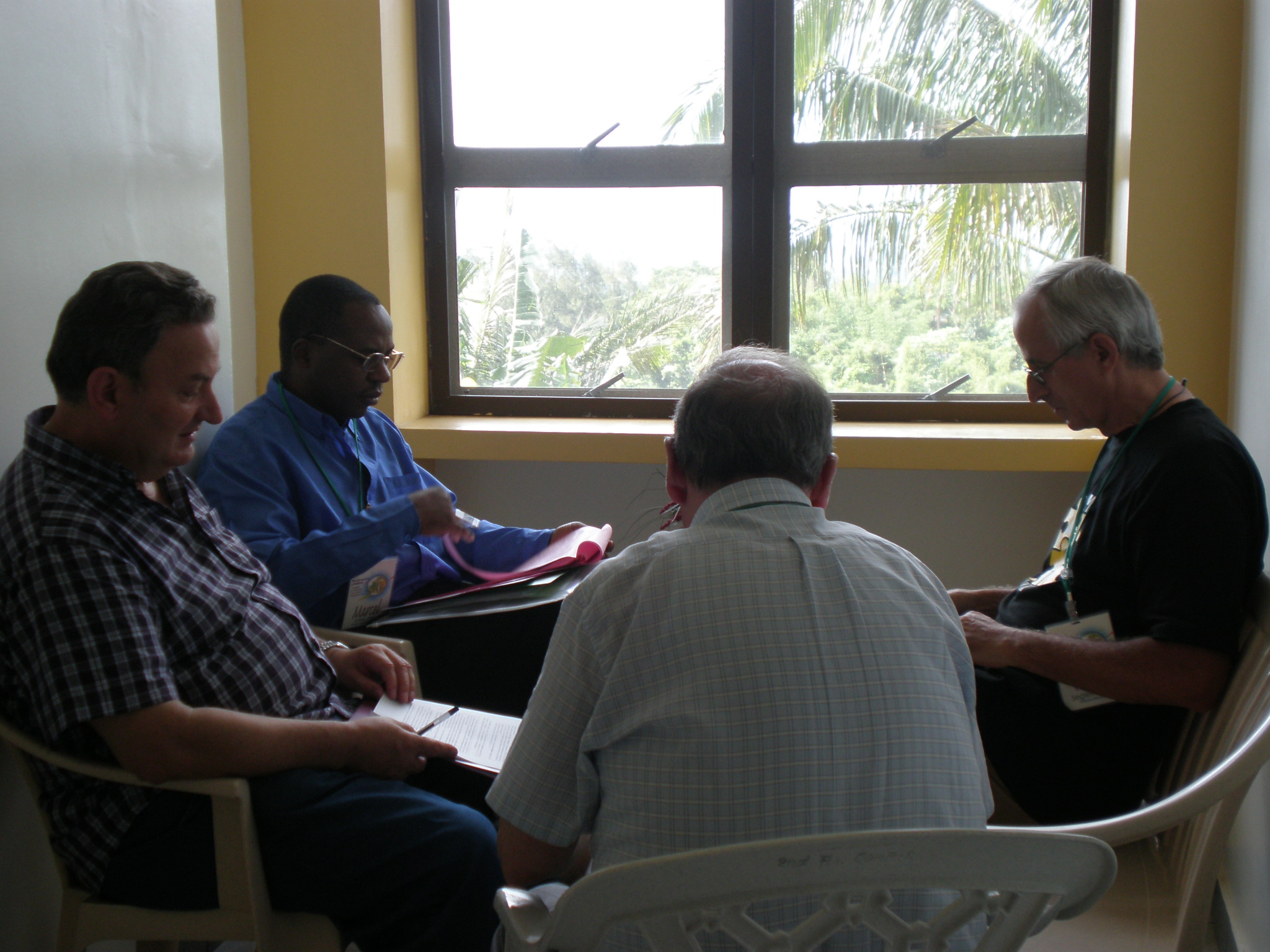
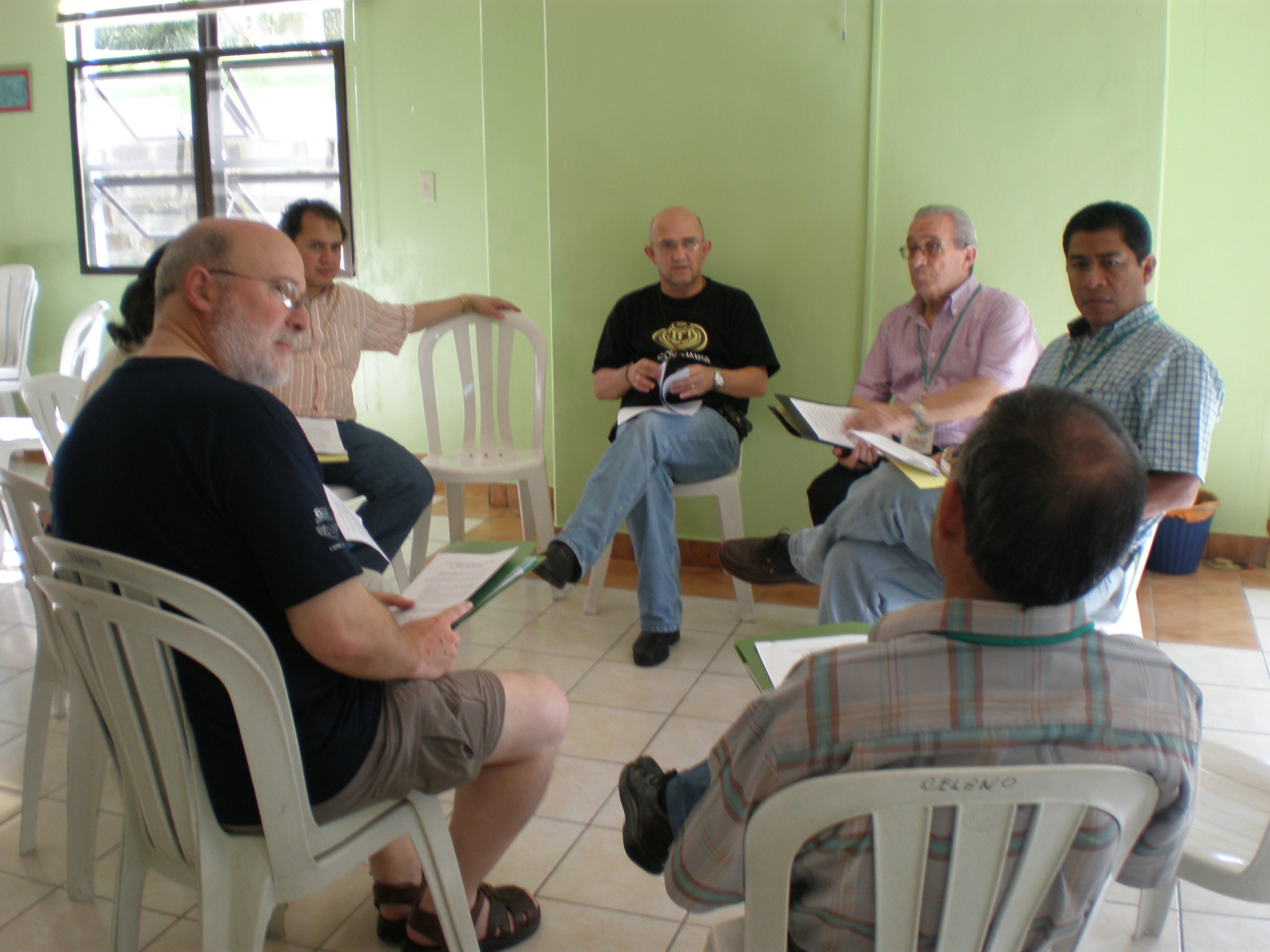
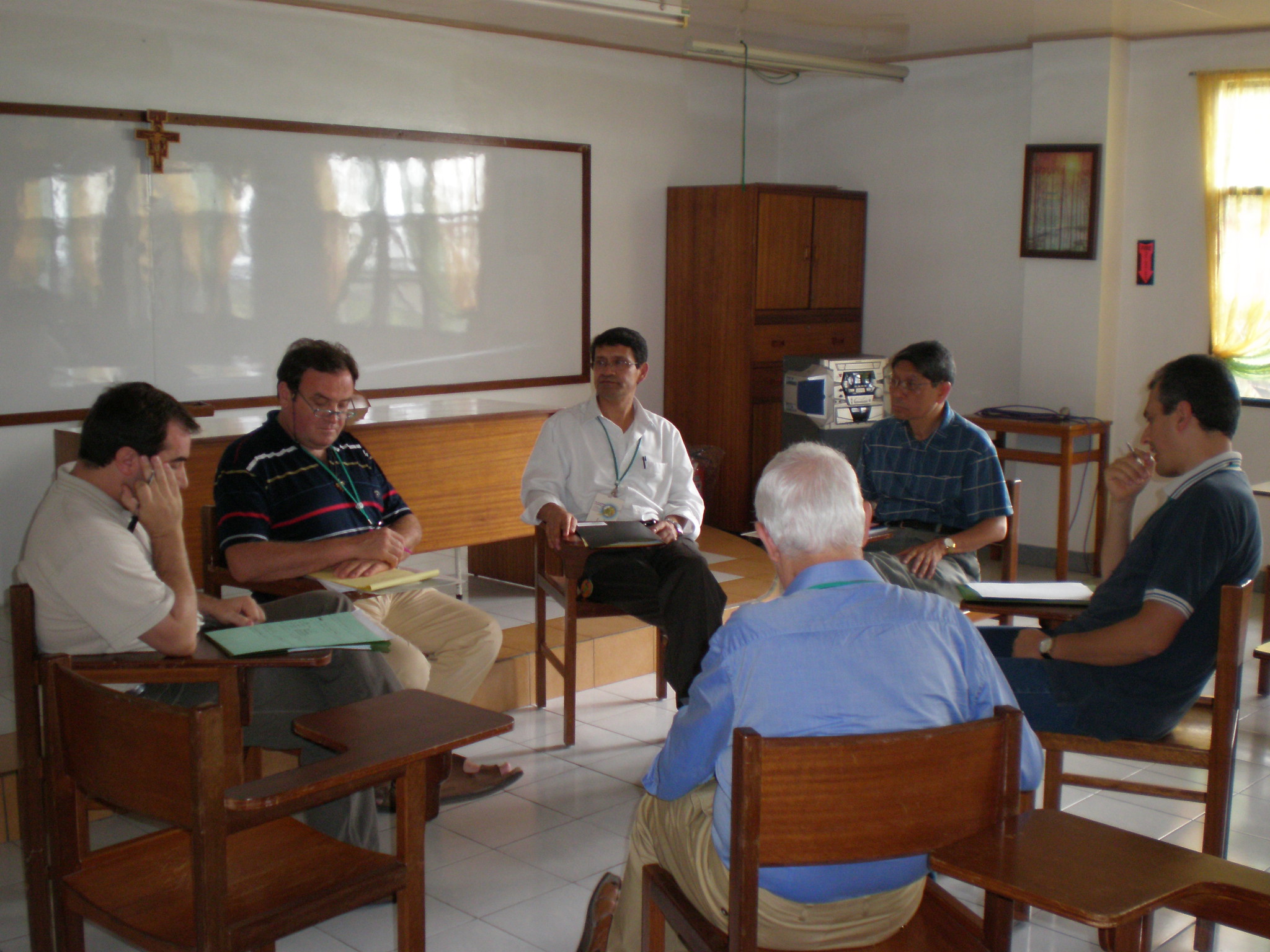
Two main questions were highlighted in his report that served as guidelines for the small group reflection and sharing of delegates which was divided according to different language groups.
- What are the orientations of the RFF, RS and OF for formation to evangelization and to a specifically missionary vocation?
- How can we form to evangelisation and mission during the various stages of formation, keeping in mind that we are an evangelizing fraternity in the process of renewal of our way of evangelizing today.
3. Reporting in Plenum
Italian-Speaking Group
Some difficulties:
- How can we free ourselves from formation structures that exist?
- Some Provinces have different kind for formation structures, like the inserted communities. This is not a guarantee to forming a different kind of mentality. It happens that sometimes we live with the poor but we have different kinds of mentality and lifestyle. We are not affected byt the environment.
The problem is not in Initial formation but in the On-going formaton
Two ways to answer the question via Culture of dialogue. We need to do this in different levels; to find ways to expose our friars to the realities of the world.
- Dialogue of ideas. We encourage friars to learn differrent ideas, different culture through readings. Encourage intellectual stimulation.
- Dialogue with one another. We must find ways to talk with one another. Describe and discuss the different words we use. Encourage each one to think together.
Responsible person to do this kind of work?
The guardians of the local community should include this as part of their important responsibility. However, sometimes guardians have no idea what should be done. We need to provide training to people we expect to be doing this task.
French-Speaking Group
- Each one should be involved to create and how to adapt the orientation and direction of the Province. There is a need to put in place a unity to the several elements linked to evangelization like faith, listening to the gospel, and fraternity. The sense of universality should be integrated in formation so that they would feel that they belong to an order that is universal. Formation lacks this sense of universality in the Order. Formation is oriented more toward intellectualism, more on knowledge. Practical formation is also lacking, like in the area for poverty, encountering with the poor people is not enough.
- The need for encounter with the people and be closer to the reality. Moment of living with the people in different categories, in philosophy, theology. The people should be our companions in formation. Be attentive to the signs of the time. To visit to fraternities in some regions, e.g experiencing violence and conflicts.
- Some formation houses are lacking in freedom. Freedom should be instilled to formants with responsibility and maturity.
- What is the finality of formation? Some theological courses should be oriented toward mission but in reality, theological courses are more speculative in character.
English-Speaking Group
- The group recogizes the existence of structures and concept. However, there is question of attitude of friars after profession. Friars looks at ordination and profession as the end of all. There is enthusiasm in initial formation to be involved in different types of exposures, but after profession, friars are not interested to these actitivies.
- There should be a dialogue of formation concepts and that of the realities when friars are assigned in the areas. Situation in Asia is multi cultural. The friars are exposed to these cultural realities, however, there are elements in formation that are not in dialogue with the reality.
- The need for a daily conversion to sustain the friars from what they learned from initial formation.
- Something has to be done for mission awareness in on-going formation. There is lack of enthusiasm to go for foreign mission.
Spanish-Speaking Group
a. The journey in three levels: listening, teaching and, proclaiming. By listening, we interiorized what we learned and we have to proclaim what we have learned. A church able to evangelize and has to be evangelized herself and in conctext of the fraternity. What we have in our formation houses are diocesan seminary structures, invidualistic. There is now difficulty of evangelizing through fraternity. Essentially, we agree that there should be a continuation of testimony from the initial formation to on-going formation.
4. Report from the Director General of JPIC (Joseph Rozansky)
Worksheet for Small Group Sharing:
a. Do you agree that JPIC is an integral part, a dimension, of our life as Franciscans?
b. How is JPIC already integrated into the evangelizing work of the Order?
c. What concrete actions would you propose to deepen a commitment to JPIC values in our evangelizing work? How can we invite the laity to take a more important part in our ministries?
5. Reporting in Plenum
English-Speaking Group
a. We all agreed that JPIC is an integral part of our life as Franciscans. But before the 80’s there were difficulties for JPIC workers because they were always branded as communists.
b. There are difficulties to integrate the JPIC in some areas due to cultural sensitivities. In Sri Lanka, one has to be careful to talk about Justice and Peace due to Tamils and Singhalese conflicts. One has to be creative to integrate this value in formation through exposures (Singhalese to Tamil and vice versa) and, dialogue with the formants.
c. To always warn ourselves that there is no “one solution” or “one model” to solve the problem of conflict and violence. We learn to adapt to the situation.
d. We need empower the the secular franciscans to be vanguards of justice and peace. They have in the right position, the power, and resources to collaborate with us.
e. We need to have structures so that JPIC can be easily shared among the people in the parish, school and other areas of our ministries.
Portuguese-Speaking Group
a. JPIC is a big part of our franciscan life. We know there are difficulties in many entities. Other friars do not consider this responsibility. There is also a problem in terminology in some contexts, because of political situations, the question of ideology, question of lifestyle, in our relationship, and the use of resources,
b. There are inititatives in favor of justice and peace works, especially initiatives in working with the poor. We have seen this in the reports of the different conferences.
c. The importance of the presence of laity should never be put in doubt. But the question is realy how? The laity are not only colloborators because of necessity but because of the theological mandate. The lay have many things to give but there is a need to form them properly. Like in Germany, the works of laity are very decisive, very professional, they can organize seminars, meeting encounters, on the themes on JPIC where they can promote the deepening of JPIC values.
The reporting will continue the following day. 
|   |

